What It Means To Be A Builder
Most people do not go through their lives thinking of themselves as builders, partly because the word sounds far more official than their actual day-to-day experience. Builder feels like a title you earn after doing something impressive, not something you quietly become while juggling responsibilities, answering messages you did not ask for, and keeping things from falling apart in ways no one else ever quite notices.
Most people do not go through their lives thinking of themselves as builders, partly because the word sounds far more official than their actual day-to-day experience. Builder feels like a title you earn after doing something impressive, not something you quietly become while juggling responsibilities, answering messages you did not ask for, and keeping things from falling apart in ways no one else ever quite notices.
And yet, when you slow down and look closely at how certain people live, what they carry, and what they continue to show up for long after the novelty has worn off, the word fits with an almost uncomfortable accuracy.
A builder is someone who sustains something that matters over time, usually while understating the amount of effort that requires.
Sometimes what they are sustaining is easy to point to from the outside. It might be a business that employs other people, a team that depends on their steadiness, or a body of work that took years to develop and far longer to maintain than anyone initially expected. Other times, what they are sustaining exists almost entirely out of public view. It might be a family system that holds together because someone is constantly thinking a few steps ahead, a household that runs smoothly because one person remembers everything, or a second chapter being shaped quietly in the margins of an already full life.
What unites these experiences is not ambition or visibility, but endurance. Builders remain present long after the initial excitement fades, long after the learning curve flattens, and long after external recognition becomes sparse or disappears entirely.
Because of this, builders tend to experience life on a slightly different frequency than people who are primarily focused on themselves. Their decisions carry weight beyond personal preference, and their mistakes tend to have consequences that linger. They think in longer timelines, feel responsibility more acutely, and make choices with an awareness that other people will live with the outcome. Over time, that responsibility stops feeling situational and begins to feel internal, shaping how they see themselves and how others come to rely on them.
Eventually, builders become the dependable ones by default. They are the people others trust to handle complexity, absorb pressure, and keep things moving when circumstances become uncertain. This reputation often looks flattering from the outside, but it has a subtle side effect. The role hardens into identity, and stepping out of it begins to feel strangely uncomfortable, even when carrying it has become exhausting.
From the outside, builders often appear calm, capable, and grounded. Internally, the experience is usually more complicated and far less tidy.
At some point, often somewhere in midlife, many builders begin to sense that something has shifted, even if they struggle to name exactly what that something is. The clarity that once felt instinctive now takes more effort to reach. Decisions that used to feel straightforward start requiring longer internal debates. Energy becomes less predictable, focus more fragile, and the internal compass that once guided choices with ease grows quieter, even though it has not disappeared entirely.
This moment can feel unsettling, especially for people who have learned to trust their own judgment. It is easy to assume something has gone wrong internally, when in reality the external context has changed far more than anyone prepared them for.
Responsibilities have accumulated. Stakes have increased. The margin for error has narrowed. Strategies that once worked reliably, such as longer hours, constant availability, and sustained intensity, begin producing diminishing returns. Over time, they quietly extract a cost that is difficult to measure but impossible to ignore. The builder has not lost capability. The life they are supporting has simply outgrown the operating style that built its earlier chapters.
This is often when success begins to feel heavier than expected, even when nothing appears broken on the surface.
On paper, things may look solid or even impressive. The structure exists, the results are real, and progress can be demonstrated without much effort. At the same time, maintaining momentum requires more energy than it once did, while the satisfaction that used to accompany achievement gradually thins out. The work continues, but it feels denser, like it now contains more weight per square inch than it used to.
When builders reach this point, they usually respond the way they always have, by applying more effort and tightening their grip. They look for better systems, sharper tools, or more disciplined routines, trusting that one more adjustment will restore the sense of control they once relied on. For a while, this approach works, because builders are skilled at compensating and adapting under pressure.
Over time, however, compensation becomes a fragile way to live.
As effort slowly replaces clarity, urgency begins to crowd out intention, and exhaustion starts to masquerade as dedication. The work still gets done, but it takes more from the person doing it than it reasonably should. What was once sustained with care and meaning begins to feel like something that must simply be carried, indefinitely and without relief.
This experience reflects a structural mismatch rather than a personal shortcoming.
Performance is often framed as output measured by hours invested, intensity applied, and sacrifice made. That framing holds up reasonably well early on, when complexity is limited and pressure is temporary. As responsibility expands and pressure becomes chronic, the model quietly erodes the very capacity it depends on, leaving capable people wondering why effort no longer produces the same sense of traction.
What allows builders to continue over the long term is clarity, developed deliberately and revisited often.
Clarity about what matters now, rather than what mattered earlier in life. Clarity about where energy is being invested and where it is being quietly depleted. Clarity about which decisions genuinely deserve attention and which ones simply create noise. Clarity about the difference between responsibility and absorbing everything personally.
This kind of clarity does not emerge through motivation or productivity techniques. It develops when builders create enough space to reconsider how they think, work, and lead at this stage of life, including the uncomfortable recognition that the version of themselves who built the first chapter may not be the most effective version for carrying the next one forward.
For many builders, that realization feels destabilizing at first, because competence and momentum are deeply tied to identity. Over time, however, it often marks a quieter and more sustainable form of maturity, one that values capacity as much as capability.
As builders adjust how they operate, performance becomes steadier rather than flashier. Decisions feel cleaner, leadership grows calmer, and the constant edge of urgency softens into a confidence that no longer needs daily reinforcement. Pressure loses its false status as a marker of importance, and exhaustion stops serving as proof of value. What they are sustaining becomes more resilient because the way they are sustaining it finally aligns with the life surrounding it.
If this description feels familiar, it does not suggest that something has gone wrong. It usually means that what is being built has reached a level of complexity that calls for a more thoughtful way of carrying it. Builders do not walk away when things grow heavier. They learn, adjust, and evolve, and through that process, what they sustain becomes stronger, steadier, and capable of lasting far longer than brute force ever allowed.
When You’re Not Being Heard
Somewhere between describing the endless pelting rain and the sound of my muted voice, a different question surfaced: “Why am I not being heard?”
I keep having this dream.
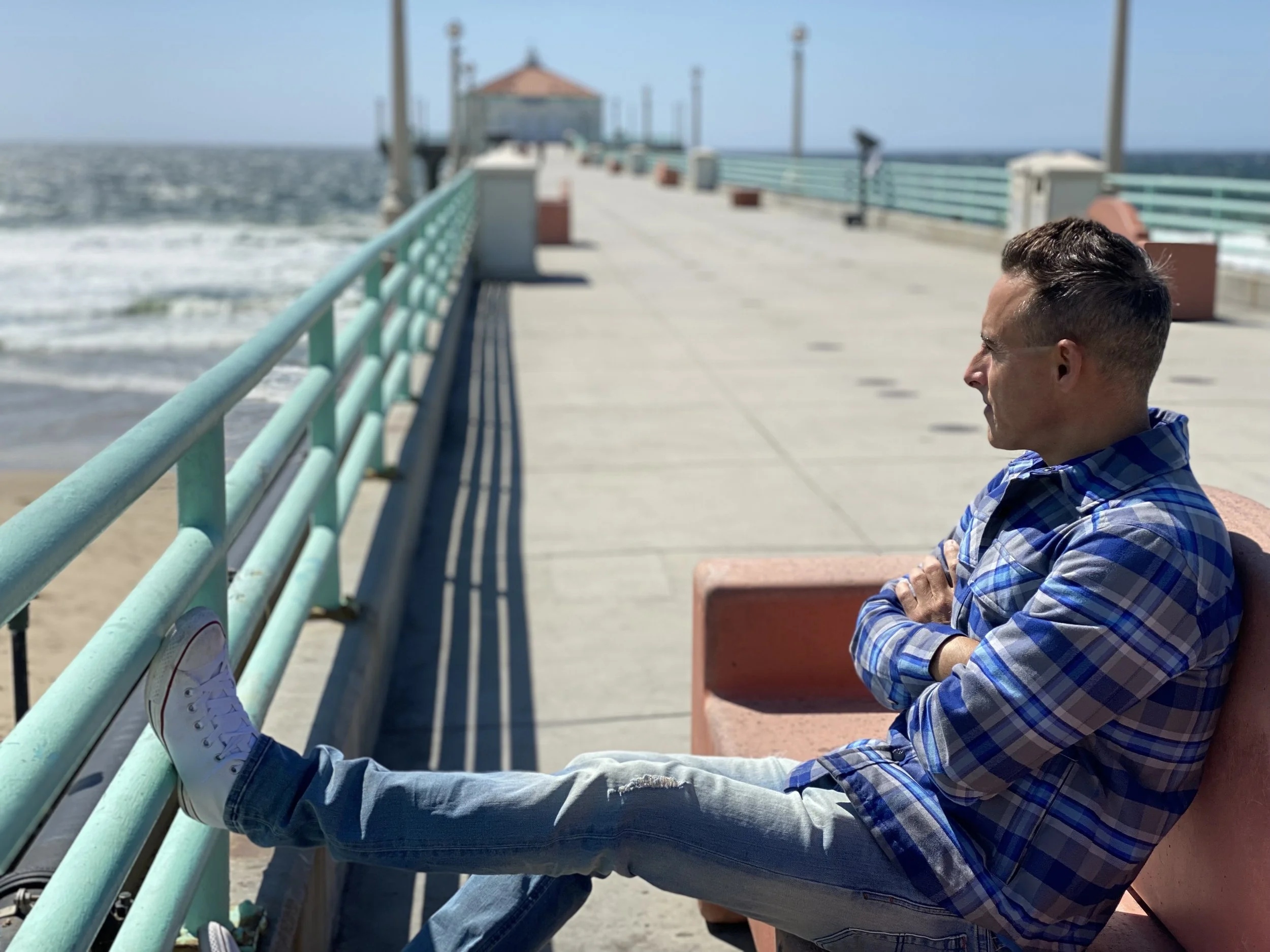
It’s the kind that doesn’t fade when you wake up. It lingers, like the smell of rain after a storm. In it, I’m standing alone at the end of a pier, staring out at the ocean as it stretches endlessly in front of me. A storm is tearing through everything. Wind shrieking. Waves crashing. Rain pelting down like cold needles. The ocean feels alive, almost angry, flexing its strength in relentless, merciless waves.
I try to find the horizon, that thin, reassuring line where the ocean meets the sky, but it’s nowhere to be found. My vision blurs as I squint into the rain. I feel small. Powerless. Lost in a wall of sound and motion that doesn’t care I’m there at all.
So I do what anyone would do.
I start yelling.
I shout at the ocean, at the wind, at something—anything. Maybe I’m asking for help. Maybe acknowledgment. Maybe I just want proof that I exist in the middle of all this chaos. But no matter how loud I yell, my voice disappears instantly, swallowed by the storm. Even my own ears can’t hear me. It’s as if my presence is being erased in real time.
When I told my therapist about the dream, I laughed and joked that it would make a great piece of modern art. But as I described it, something unexpected happened. Somewhere between the crashing waves and the sound of my own muted voice, a question surfaced that stopped me cold:
Why am I not being heard?
That question didn’t come out of nowhere. It touched something I’ve wrestled with for as long as I can remember. Not just the desire to have a voice, but the deeper need for that voice to matter. To be heard. To be seen. And once I noticed it, I couldn’t unsee how much of my life had been shaped by that pursuit.
As a kid, I was the smallest person in nearly every room. Classrooms. Family gatherings. Kickball games. I lived in the shadows of bigger bodies and louder personalities that seemed to take up all the oxygen. Silence became my default. Yet in smaller spaces—family dinners, afternoons with close friends—I came alive. I was thoughtful. Funny. Imaginative. I built entire LEGO cities and lost myself in elaborate worlds of my own making. In those quieter, safer environments, I felt vibrant because I could be heard.
And it felt incredible.
But life doesn’t stay small. It gets louder.
As I grew older, my voice grew with me. I jumped into debates at school. Held court with friends. Shared ideas with confidence and curiosity. It wasn’t about needing attention or being right. It was about connection—the feeling that someone was leaning in, actually listening. That’s when I first understood the link between being heard and feeling confident, compassionate, and whole. My voice mattered. Which meant I mattered.
Then post-college life arrived with all the subtlety of a piano falling out of a fifth-story window.
The structured rhythm of school disappeared, replaced by something chaotic and unforgiving called “the real world.” My first job was telemarketing. Insurance. Cold calls. Scripts. From the moment I walked in, my voice stopped belonging to me. Every word was dictated. Approved. Timed. My instincts, ideas, and personality weren’t part of the equation. Only numbers were.
It didn’t last long.
One day, out of sheer frustration, I decided to turn the pitch into a full Jerky Boys parody. Voices. Absurdity. Total commitment. My coworkers were losing it. Management was not amused. The next day, I was pulled into an office and forced to listen to the recording—every painful second of it—before being fired on the spot.
And the strange thing is, I wasn’t angry.
I was relieved.
That job wasn’t wrong. It just wasn’t aligned. The culture. The values. The way my voice didn’t matter at all. I didn’t have language for it then, but I was beginning to understand something essential: the environments we operate in determine how much of ourselves we’re allowed to bring with us.
Over the years, I worked across big companies, small businesses, freelance roles, and creative projects. Some experiences were fine. Others were draining. But the pattern was consistent. When I felt genuinely heard—when my ideas and perspective were valued—I was energized, engaged, and effective. When I wasn’t, exhaustion crept in. Frustration followed. Eventually, disconnection took over.
Which raises a deeper question: what does it actually mean to be heard?
It’s not polite nodding or surface acknowledgment. Being heard means someone is truly paying attention. Leaning in. Trying to understand. It’s the difference between surviving inside a system and thriving within one. And when that need goes unmet for long enough, people don’t fail. They burn out. They disengage. They start questioning themselves when the real issue is the environment they’re operating within.
That dream still visits me from time to time. The storm. The noise. The vanishing voice. And it reminds me of something I now know to be true: being heard isn’t a luxury. It’s a necessity. It shapes how we think, how we lead, and how we stay connected to who we are under pressure.
The work I do today is rooted in that understanding. Helping people recognize when the systems around them—and the ones they’ve internalized—no longer allow them to think clearly or operate sustainably. Because clarity doesn’t come from yelling louder into the storm. It comes from learning how to operate differently, in environments where your voice can finally carry.

When Success Becomes Unsustainable
But beneath the surface of what seemed like an enviable career, I felt a growing restlessness, a quiet dissatisfaction I couldn’t ignore. While I genuinely loved aspects of the work—building relationships, learning from incredible professionals, and being part of the hospitality community—the relentless grind of sales began to take its toll.
For more than a decade, I built a career in the fine wine and spirits industry as a sales professional and Certified Sommelier. I had the privilege of working alongside world-class chefs, sommeliers, and hospitality leaders, visiting iconic restaurants, hotels, and venues across the country and abroad. As a passionate foodie, I loved the relationships, the learning, and the energy of an industry so many people admire from the outside.
From intimate wine dinners to walking vineyards in Tuscany, the work often felt surreal. Friends and colleagues were quick to remind me how “lucky” I was. For a long time, I believed them.
But beneath the surface of what looked like an enviable career, something didn’t sit right. While I genuinely enjoyed parts of the work, the relentless rhythm of sales slowly began to take its toll. Quotas never stopped. Goals were always moving. Evenings, weekends, holidays, and vacations lost their boundaries. Texts, calls, and emails followed me everywhere, until work was no longer something I did. It became who I was.
I told myself this was simply the price of success. That if I worked harder, pushed through the stress, and kept achieving, fulfillment would eventually catch up. Instead, the opposite happened. My energy declined. My weight fluctuated. Relationships strained. Mental and physical stamina eroded. At the end of long days, I’d collapse on the couch, too drained to walk my dog, who somehow always seemed to sense how spent I was. My personal life had become an afterthought, squeezed into the margins between obligations.
I was surviving. I wasn’t thriving.
Then came what I thought was my breakthrough: an opportunity to represent one of the most prestigious wine portfolios in the world. It felt like the culmination of everything I’d worked toward. For the first time in years, I felt genuinely excited again. Six months later, the pandemic arrived, and I was furloughed. Just like that, the career I had sacrificed so much for disappeared.
At first, the loss was disorienting. The questions came quickly and relentlessly. Would I be brought back? Did I even want to return? Was this really the life I had been building all along?
As the world slowed down in 2020, so did I. For the first time in years, there was space to think. Real space. That pause became a reckoning. I could finally see what I hadn’t allowed myself to acknowledge before: parts of my career had been rewarding, but the cost was unsustainable. Constant availability. Chronic stress. Neglect of my own health and well-being. Something had to change.
That moment marked a reawakening.
For the first time, I gave myself permission to imagine a different future. One with boundaries. One that respected mental and physical health. One that didn’t require sacrificing everything else in the name of success. I began deliberately reshaping how I worked and lived, choosing alignment over momentum and sustainability over status.
The transition wasn’t easy, but it was clarifying. And it was worth it.
Today, I’m deeply invested in helping others navigate similar crossroads. I work with high-achieving individuals who have done everything “right” and still find themselves exhausted, disconnected, or questioning the life they’ve built. I understand the fear that comes with change. I also know what becomes possible when you stop forcing more output from systems that are already strained.
This chapter of my life has taught me that fulfillment isn’t found by pushing harder. It’s found by operating differently. Balance, clarity, and autonomy aren’t fantasies reserved for a select few. They’re attainable when success is redesigned to actually support the life you want to live.
That’s the work I’m committed to now. And if you’re standing at a similar point, wondering whether there’s another way forward, there is. I’m living proof of that. As I like to say, the proof is in the Patrick.

Finding TheThrough-Line
From Hollywood to high-end wine sales to helping people reclaim their lives after burnout — my path hasn’t followed a straight line. But every twist, every pivot, and every so-called “detour” has led me exactly where I’m meant to be.
From Hollywood to high-end wine sales to helping people find their footing after burnout, my path has never followed a straight line. For a long time, I saw that as a problem. Now I understand it as preparation. Every pivot, every apparent detour, has carried me exactly where I needed to go.
I grew up in Pennsylvania and graduated from Penn State with a degree in Communications, determined to build a career in television and film. Not long after, I landed my first job on the set of The Sixth Sense as a production assistant. That early break pulled me across the country to Los Angeles, where I spent several years working on large-scale film and television productions. From the outside, it looked exciting. Inside it was something else entirely. Grueling hours, constant hustle, low pay, and a work culture that normalized exhaustion and quietly rewarded self-abandonment. The glamour faded quickly. What remained was a version of success that demanded everything and gave very little back.
Eventually, I stepped away. I returned to bartending, something I had always done between freelance gigs, assuming it would be temporary. Instead, it became the beginning of a new chapter. I started working at Fleming’s Prime Steakhouse and Wine Bar and suddenly found myself surrounded by more than 200 wines by the glass and very little understanding of what I was pouring. Curious and slightly overwhelmed, I gravitated toward the most knowledgeable people in the room and began asking questions. That curiosity turned into commitment. I enrolled in certifications through the Court of Master Sommeliers and built what would become an eighteen-year career in the wine and spirits industry. I worked with major companies, traveled to wine regions around the world, and developed a respected career on the sales side of the business.
And yet, something familiar returned. Despite outward success, the same pattern resurfaced: burnout, toxicity, hollow wins, and a creeping sense that the life I was building wasn’t actually mine. My creativity dulled. My joy thinned. I began asking the question I had learned to ignore: Is this really it?
Then the pandemic arrived. Like many others, I was laid off from a job I had been repeatedly assured was secure, at a prestigious global company that spoke fluently about loyalty and stability. I later learned how replaceable I truly was. That realization was disorienting, not just professionally, but personally. It forced me to confront something I had been avoiding for years: how often I had abandoned myself in pursuit of approval, security, and externally defined success.
In the stillness that followed — without a title, a paycheck, or anyone else’s expectations to meet — I finally slowed down enough to listen. What I saw was a pattern. I had been choosing roles that looked safe and respectable, not because they fulfilled me, but because they kept others comfortable. They made my family proud. They reassured partners. They fit neatly into society’s script. Meanwhile, inside, something essential was quietly eroding. That awareness changed everything.
As I reflected, my mind kept returning to an earlier chapter of my life, one where fulfillment had come easily: lifeguarding and teaching kids how to swim. I loved the responsibility, the presence required, and the knowledge that what I was doing mattered in a tangible way. The through-line became impossible to ignore. I’ve always been drawn to protecting, supporting, and guiding others through moments that matter. So I asked myself a different question: if I’m not here to chase hollow versions of success, what am I here to do?
I explored graduate school in psychology. I thought seriously about the therapists who had supported me through my own growth and considered following that path. But the structure, cost, and rigidity didn’t feel realistic in a post-pandemic world already demanding flexibility and adaptability. That’s when coaching entered the picture. With encouragement from my therapist, I began researching training programs, methodologies, and philosophies. The deeper I went, the clearer it became. I enrolled, started training, and felt something I hadn’t felt in a long time: alignment.
The parts of me that had been buried by performance and pressure — empathy, intuition, curiosity, the ability to hold space and ask meaningful questions — finally had room to breathe. What once felt like a series of detours began to make sense. Sales taught me how to listen and communicate with precision. Film taught me how to think clearly under pressure. Lifeguarding taught me calm, presence, and responsibility in critical moments. Coaching wove it all together. It wasn’t just what I wanted to do. It was what I was meant to do.
Today, I work with high-achieving professionals, creatives, and entrepreneurs who find themselves at a crossroads — successful on paper, yet burned out, unsettled, and quietly wondering whether the life they’ve built is sustainable. Many arrive tangled in “shoulds,” unsure whether to stay, leave, or redefine their path entirely. Together, we create a grounded, co-creative space built on honesty and trust. We identify what’s keeping them stuck and redesign how they operate so their life and work can finally align from the inside out.
The truth is, the answers they’re looking for are already within them. My role is to help bring clarity to what they already know and courage to act on it with compassion and steadiness. If you’ve landed here, there’s a good chance you’re not just curious. You’re ready. That quiet pull you feel isn’t random. It’s your own wisdom asking for your attention — and I’d be honored to support you as you explore what comes next.